

If you have an abundance of fresh tomatoes, freezing them is one of the easiest ways to preserve them for later. No canning supplies or special equipment required!
I make homemade tomato sauce, spaghetti sauce, soups and other hearty comfort food recipes throughout the year, so I love having a stash of frozen tomatoes ready to go in my freezer. It’s a simple way to preserve fresh summer tomatoes at their peak and enjoy that garden-fresh flavor long after tomato season has ended.
Learn how to freeze tomatoes so they’re ready to use in sauces, soups, chili, stews and more whenever you need them!
Can you freeze fresh tomatoes?
Yes! Fresh tomatoes can be frozen whole, peeled or chopped. Freezing is a great way to preserve ripe garden tomatoes for use in cooked recipes throughout the year.
Frozen tomatoes maintain their best quality for about 6 months and can be stored for up to 12 months. Because they soften after thawing, they work best in tomato sauce, soup, chili, stews and other cooked dishes.
Keep in mind that frozen tomatoes become softer after thawing, so they’re best used in cooked recipes rather than fresh preparations such as salads or salsa.
Why This Method Works
After freezing tomatoes this way for years, it’s become my favorite method because it is so simple, reliable and it works with just about any variety of tomato.
Here are a few reasons I love it:
- No canning supplies, special equipment or complicated process required.
- Works with roma, San Marzano, plum, heirloom and other garden-fresh tomatoes.
- It’s a great way to preserve tomatoes at peak ripeness before they go bad.
- Blanching makes the skins literally slide right off, saving time later.
- Keeps summer tomatoes on hand even when fresh garden tomatoes are months away.
- Helps ensure none of your hard-earned tomato harvest goes to waste.
- As someone who makes homemade tomato sauce year-round, I especially love having frozen tomatoes on hand when fresh garden tomatoes aren’t in season.
What You’ll Need
Tomatoes – Almost any variety of ripe tomato can be frozen, including roma, San Marzano, plum, beefsteak, heirloom, cherry and grape tomatoes.
Choose tomatoes that are fully ripe and slightly soft to the touch, but avoid tomatoes that are overly soft, mushy or showing signs of spoilage.
Freezing tomatoes at peak ripeness helps preserve the best flavor and texture for future soups, sauces and stews.
How To Freeze Tomatoes
Freezing tomatoes is such a simple process that involves blanching, peeling and packaging them for storage.
Once frozen, they’re absolutely perfect for homemade tomato sauce, spaghetti sauce, soups, chili, stews and other cooked recipes throughout the year!
Step 1: Prepare the Tomatoes
Wash the tomatoes under cool running water, gently rubbing away any dirt.
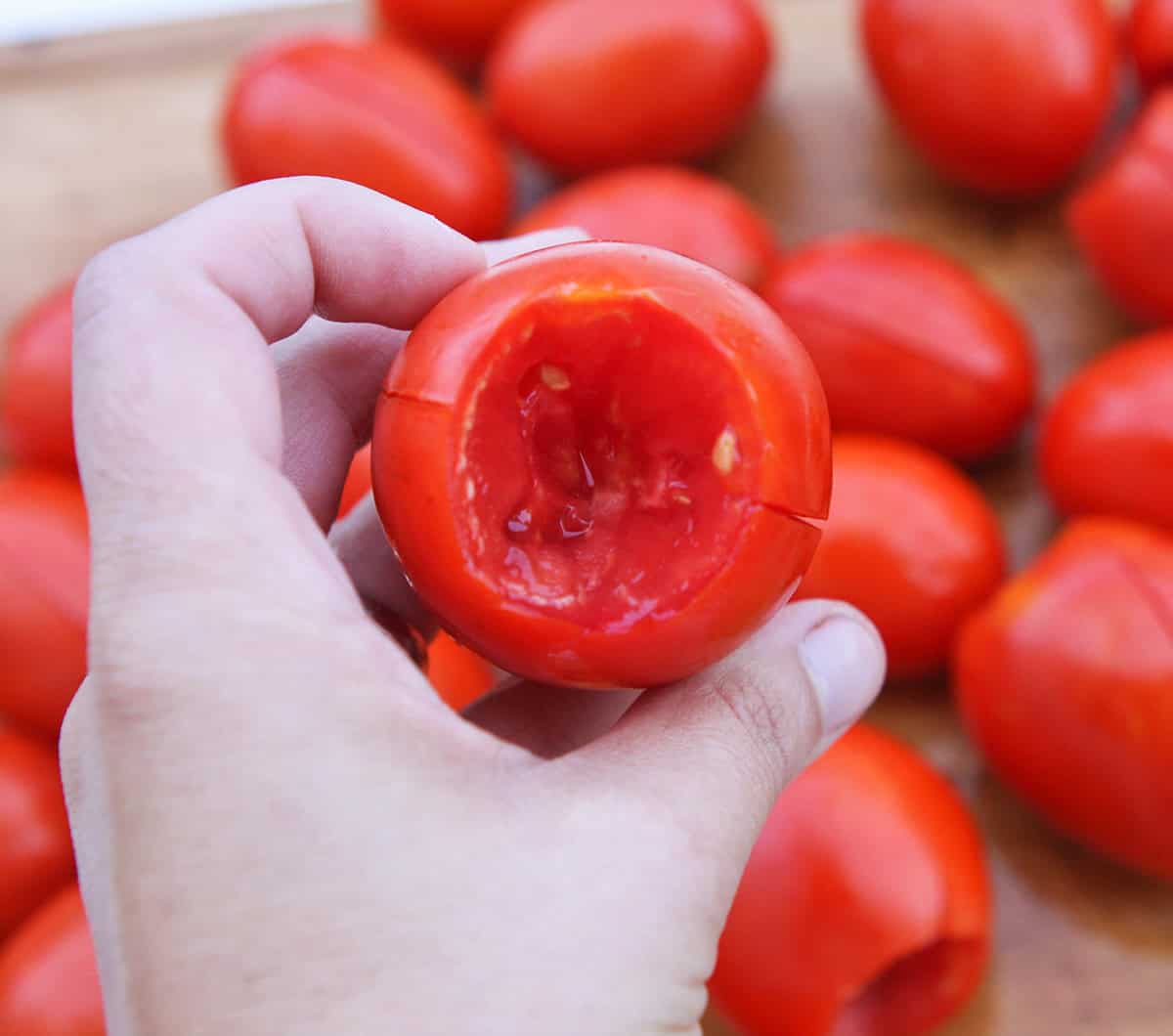
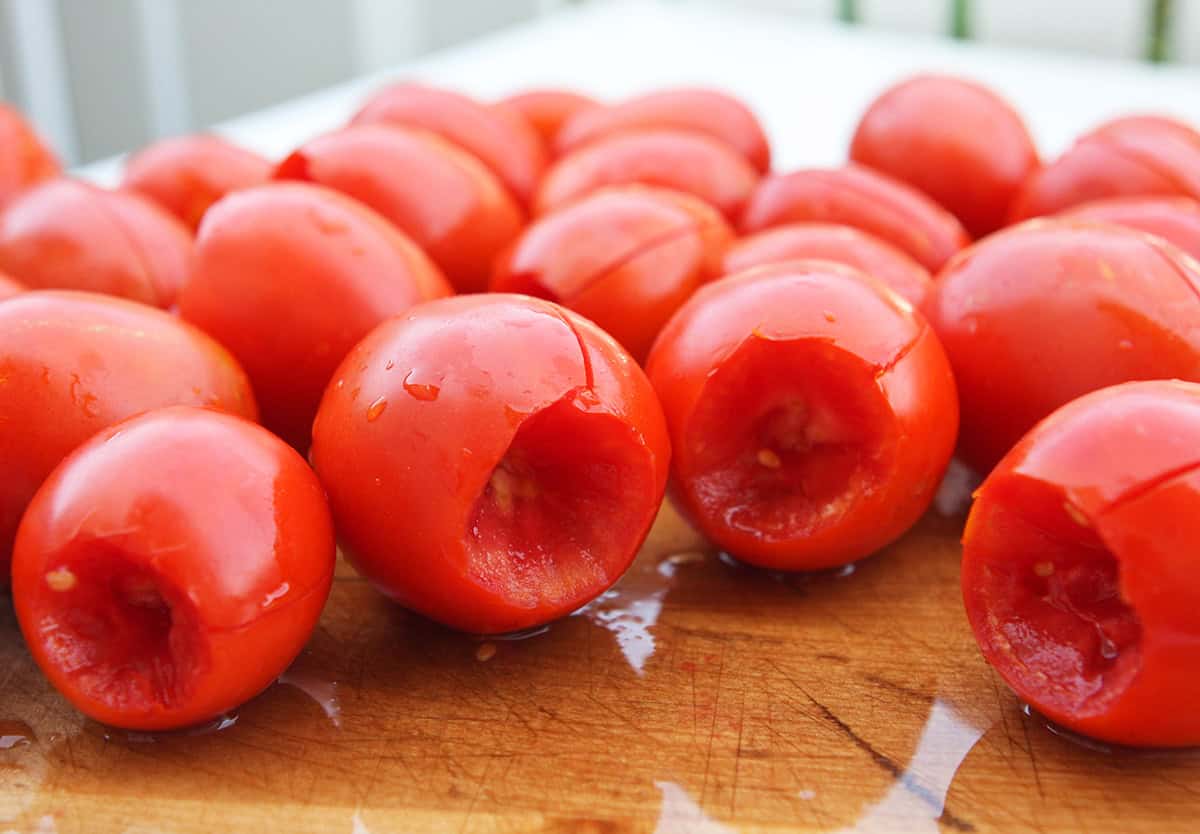
Using a paring knife, remove the stem and core from each tomato in a cone shape. Next, score a line into each tomato just enough to break the skin, going from one side of the cored circle all the way down and up to the opposite side of the circle.
(This will make removing the skins a piece of cake when we get to that step.)
Step 2: Blanch the Tomatoes
Bring a large pot of water to a boil and prepare a large bowl of ice water.
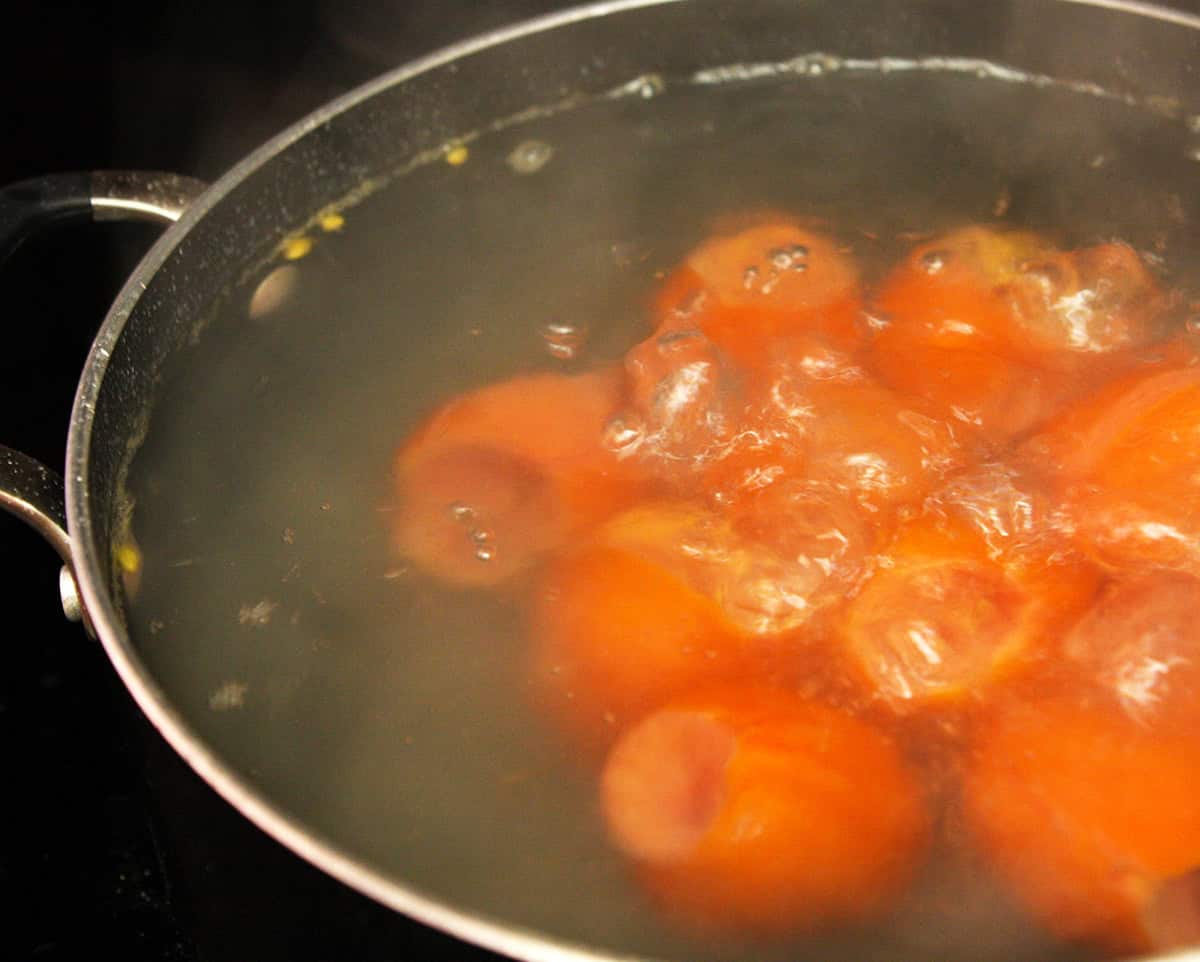
Working in batches, carefully place the tomatoes in the boiling water for 1 to 2 minutes, or until the skins begin to loosen.
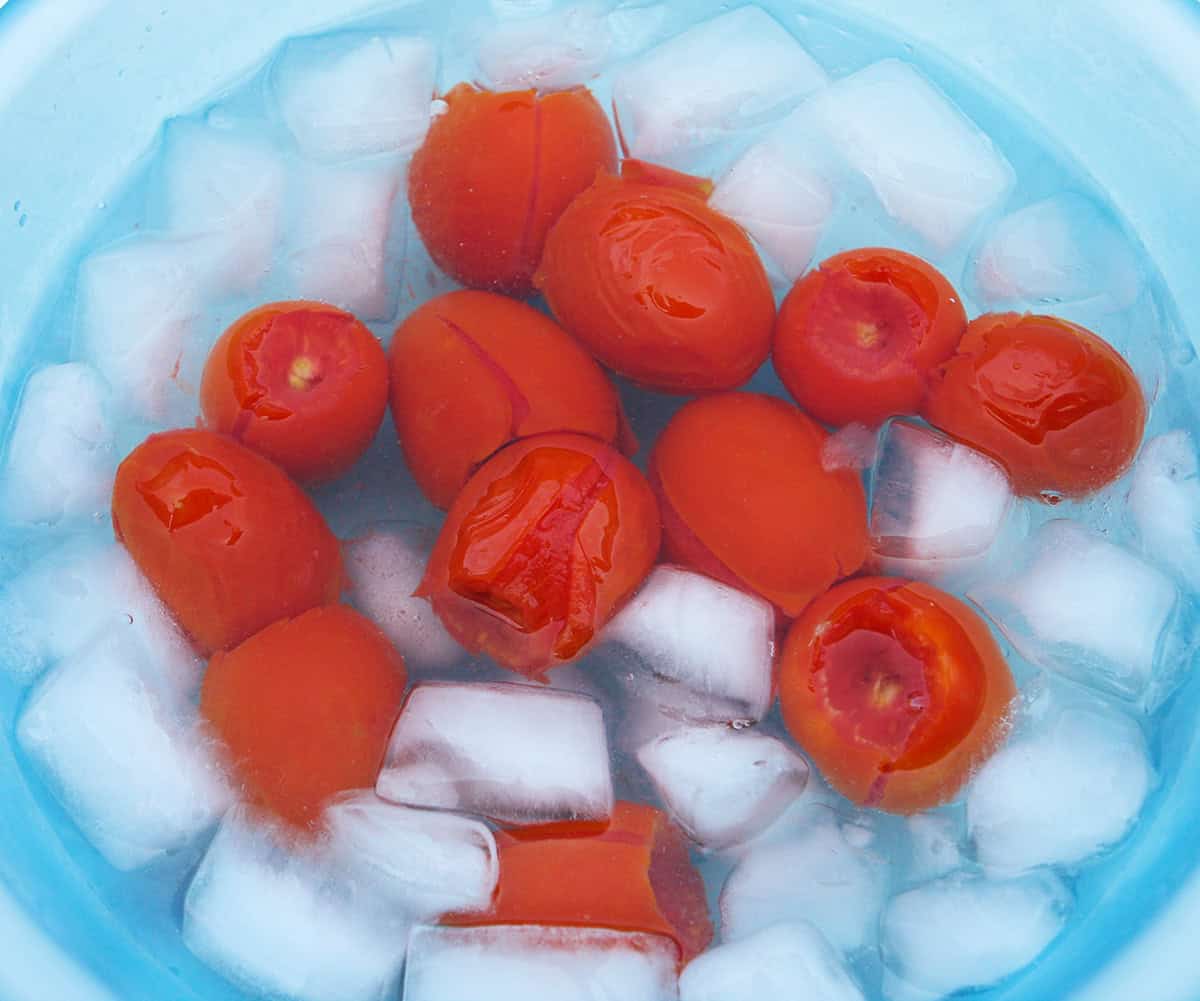
Using a slotted spoon, immediately transfer the tomatoes to the ice water and let them cool for about 1 minute.
Step 3: Peel the Tomatoes
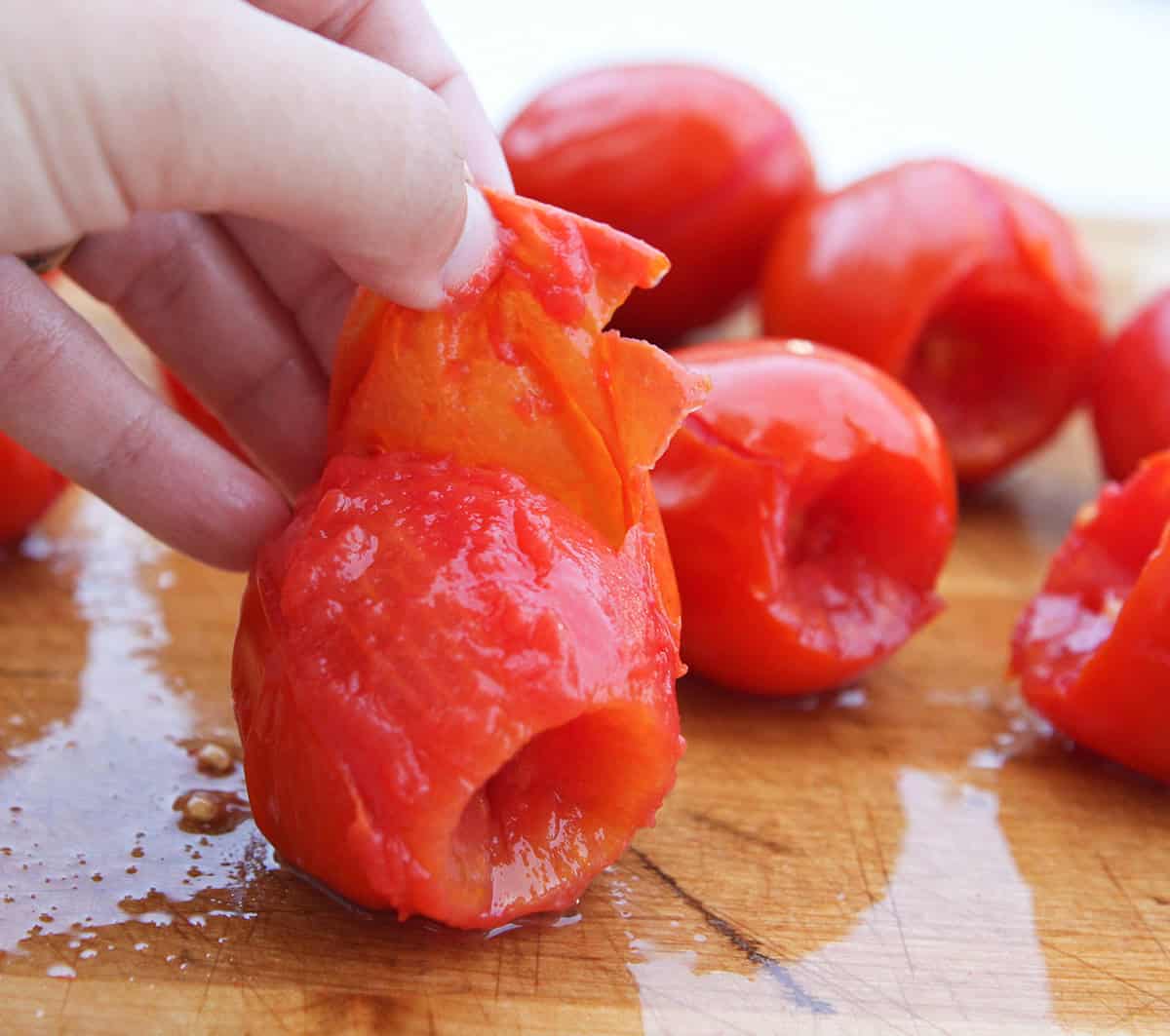
Transfer the tomatoes to a work surface. Thanks to the blanching process and the scored line, the skins should slip off easily. Gently peel away and discard the skins.
Step 4: Package and Freeze
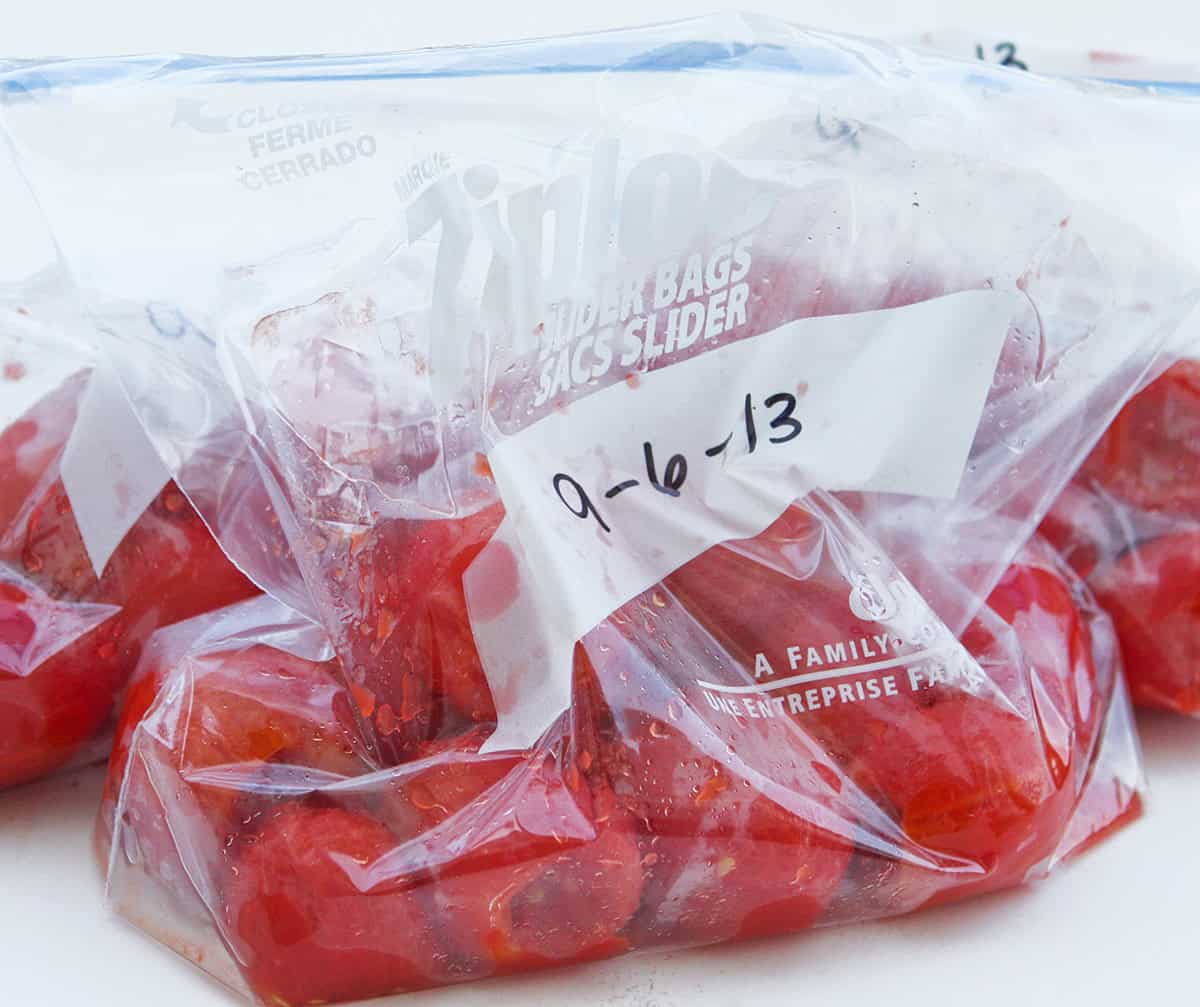
Place the peeled tomatoes into freezer-safe bags or airtight containers. Remove as much air as possible before sealing to help prevent freezer burn.
Label with the date and place in the freezer. Tomatoes can be frozen for up to 12 months, but for the best flavor and texture, I recommend using them within 6 months.
Is It Better to Freeze Tomatoes Whole or Chopped?
Both methods work well, so it mostly depends on how you plan to use the tomatoes later.
If you already know you’ll be using them in recipes that require chopped tomatoes, go ahead and chop them before freezing to save time. If you’re unsure how you’ll use them, I recommend freezing them whole. Once thawed, tomatoes are soft and easy to chop, making them versatile for a variety of recipes.
Can You Freeze Cherry Tomatoes?
Yes! Cherry tomatoes and grape tomatoes freeze great.
Unlike larger tomatoes, there is no need to blanch, peel or core them before freezing. Simply wash and dry the tomatoes, then spread them in a single layer on a baking sheet and freeze for about 30 minutes.
Once frozen, transfer them to a freezer-safe bag or airtight container, label with the date and return them to the freezer.
Frozen cherry tomatoes are perfect for soups, sauces, stews and roasted tomato recipes.
How Long Can You Freeze Tomatoes?
Frozen tomatoes will maintain their best quality for about 6 months, but they can safely be stored in the freezer for up to 12 months.
For the best flavor and texture, use frozen tomatoes within 6 months and keep them stored in airtight containers or freezer bags to minimize freezer burn.
How To Thaw Frozen Tomatoes
Transfer frozen tomatoes to the refrigerator overnight or let them sit at room temperature for 1 to 2 hours.
If you’re making soup, chili, spaghetti sauce or tomato sauce, you can add frozen tomatoes directly to the pot without thawing them first.
What To Make With Frozen Tomatoes
Because frozen tomatoes soften as they thaw, they shine in cooked recipes where texture isn’t as important. I often use them in homemade tomato sauce, but they’re also great in soups, chili and other comfort food favorites!
Here are some of my favorite ways to use frozen tomatoes:
- Homemade Tomato Sauce
- Spaghetti Sauce
- Marinara Sauce
- Roasted Tomato Soup
- Chili
- Vegetable Soup
- Stews
- Tomato Jam
FAQ
Yes. Tomatoes can be frozen without blanching, but blanching makes the skins much easier to remove. If you plan to use the tomatoes in sauces or soups, either method works well.
Yes. Many people freeze tomatoes whole with the skins intact and remove them after thawing.
Transfer frozen tomatoes to the refrigerator overnight or let them sit at room temperature for 1 to 2 hours. For soups, stews and sauces, frozen tomatoes can often be added directly to the pot without thawing.
For best quality, avoid refreezing thawed tomatoes. If the tomatoes were thawed safely in the refrigerator and have not been sitting at room temperature for an extended period, they can technically be refrozen, but the texture will deteriorate further.
Tomatoes contain a large amount of water. Freezing changes their texture, causing them to soften once thawed. This is completely normal and makes them ideal for cooked recipes.
Not recommended. Frozen tomatoes lose their firm texture after thawing and are best used in cooked dishes.
For most home cooks, the best method is to blanch, peel and freeze ripe tomatoes in freezer-safe bags with as much air removed as possible.
While the texture changes after freezing, the flavor remains excellent. Frozen tomatoes are a great substitute for fresh tomatoes in sauces, soups, chili and stews.
How to Freeze Tomatoes (Best Way to Preserve Fresh Tomatoes)
Ingredients
- 2-3 lbs tomatoes any variety, at prime ripeness
Instructions
- Wash tomatoes under cool running water, lightly scrubbing them with your fingers or a gentle vegetable brush.
- Using a paring knife, remove the stem and core from the tops of the ripe tomatoes in a cone shape. Using a sharp knife, score a line into each tomato just enough to break the skin, going from one side of the cored circle all the way down and up to the opposite side of the circle. (This will make removing the skins a piece of cake when we get to that step.)
- Prepare a large saucepan of boiling water, as well as a large bowl filled with ice water. In batches, add the tomatoes to the boiling water in 2-minute intervals.
- Using a large slotted spoon, transfer the tomatoes to the ice water and let sit for 1 minute.
- Using the slotted spoon, transfer the tomatoes from the ice water to a flat work surface. Remove the tomato skins, they will just slip off because you scored them ahead then discard. They will peel off the tomatoes like butter.
- Place the tomatoes into large plastic freezer bags in a single layer and be sure to remove as much excess air from the bag as possible. Seal the bag. Now they are ready to deep freeze! To help avoid freezer burn, double pack them into airtight containers.
- Use frozen tomatoes in homemade tomato sauce, spaghetti sauce, soups, chili, stews and other cooked recipes.
Notes
- Tomatoes maintain their best quality for about 6 months but can be frozen for up to 12 months.
- For best results, freeze tomatoes at peak ripeness.
- Frozen tomatoes will soften after thawing and are best used in cooked recipes such as tomato sauce, soups, chili and stews.
- Cherry and grape tomatoes can be frozen without blanching or peeling.
- If desired, tomatoes can be frozen whole with the skins on and peeled after thawing.
Nutrition

Megan Porta is a comfort food recipe creator who specializes in easy family meals and Instant Pot desserts, and the founder of Pip and Ebby. She has been cooking for three decades and developing recipes for over fifteen years, helping home cooks make reliable, cozy recipes for real life.
I have frozen tomatoes for years. Put them in a blender with skins on.Than freeze.
I made a mistake by not cutting the end (core) off the top of the tomato before putting them to boil for 10 min. I continued to put them into an ice bath for 2 minutes then i cut the core off and easily peeled the skin off. My question is: there is some water from the tomatoes and I’m wondering if I should dump it, or no harm in keeping it since I plan to turn the tomatoes into pasta sauce anyway. Thanks so much for sharing this very simple & easy recipe !
Great job getting started! I wouldn’t sweat it. When they thaw, it’ll either burn off in cooking or melt off. It’ll be delicious when you get to cooking with them!
After I scald, peel & cut off tops, I cut up in bowl and then pour all tomatoes in colander to drain liquid and a lot of seeds….then I bag and freeze all tomatoes.
I just core and freeze them with the skins on. They cut up easier when partially thawed.
Even spur of the moment put them in water for 10 min they will be thawed enough to cook.
Takes much less time, no one notices the skins and the skins are probably good for us anyway.
Glad you shared – thanks!
DO NOT leave your skins on the tomatoes if you are freezing or canning. They are tough and not eatable at all
I don't really have a garden, (Want one though) But I do grow my own tomatoes in 5 gallon buckets on my deck, Never thought to freeze them! Great idea! My neighbor grows summer squash and gives quite a bit, I freeze it and it tastes ok but not sure I do it correctly. Could you post something on that? Thanks Megan!!!!
You don't have to go to all the work of removing the skin prior to freezing. I just freeze whole, then while thawing the skin just falls off and I lift it out.
I don't take off the skins, never have. When you cook the tomatoes they break up, or in a salsa they just fall apart and are fine. It saves alot of time. I always wondered why people take them off ?!?
I don’t skin mine for salsas either, can’t tell a difference. I am going to freeze to see how close to fresh salsa it tastes like, I like canned salsa, but I miss that fresh taste when I eat it in the winter.
Fresh is definitely amazing! But even with frozen tomatoes being used, it’s still fresh tasting because you don’t have the preservatives that a canned or jarred salsa has. Enjoy!
I'm think these can be used instead of canned tomatoes in recipes. The only canned tomatoes I buy are petite diced tomatoes and tomato sauce (and tomato paste). Do you know what I need to do to make those? Could I simple dice the final product to sub for petite diced tomatoes in recipes?